

Here’s another great post by AllyOz looking at how your position in World standings has affected your chances in a RWC tournament. There’s a lot of analysis going on right now and we’re hearing all sorts of things from all sorts of people about who might play who when and what it means for their chances and where teams might end up. For me it’s pretty simple. In the pool you can afford a loss, after that you can’t and while you might prefer to meet another team later in the tournament, if NZ meets the Boks in the Qtr finals and doesn’t put them away, they were never going to beat them later so it doesn’t really matter. If you want to win the RWC, then you just have to win all the games, all the time in the tournament knock out. You can analyse it until the cows come home, but that doesn’t change. Anyway, here’s a much better piece of analysis and thought.
Rugby by Numbers – How important are World Rankings

Australia’s poor performance across the back have of the year proved costly and it wasn’t just national pride and fan mental health that felt the impact. The failure to make to top six, and qualify as a leading side in one of the six world cup pool groups is seen as a major impediment to our capacity to go deep in our home tournament in 2027. But just how important are world rankings a couple of years out from the tournament? How well do the rankings hold in the intervening couple of years, and are they a reasonable indicator of who will win the tournament.
2007

Spoiler Alert! And apologies to anyone who hasn’t watched it yet, or who had so successfully put it to the back of their minds that they thought they had forgotten it, but, in 2007 a gritty performance by South Africa emerge as champions of the world after an enthralling (dull contest against England in the final. Neither side managed to put the ball over the chalk with the final result a 15-6 (5 penalties to 2 penalties) in favour of the DDFs.
But how did they look two years out? South Africa had been ranked second behind New Zealand two years out from the 2007 RWC, but fallen to fourth on the eve of the tournament. England, the losing finalist, were fifth after the December internationals in 2005 and had slipped to seventh. New Zealand and Australia had entered the tournament ranked 1 and 2 respectively, but both bowed out in the quarters, in both cases, their worst ever results in RWCs to that point. It is funny how the mind plays tricks because I didn’t really remember us being that highly ranked. John Connolly, who was passed the colostomy bag that the Wallabies had become under Eddie Jones, deserves more credit but our World Cup was a disappointment that couldn’t be overcome.
Wales and Ireland both failed to make it out of there pools, despite being in the top 8 teams going into the tournament and Argentina finished third at the tournament, beating France in the “losers” playoff after being ranked eighth two years out and sixth immediately prior. The hosts France had held on two a third place ranking both at the two year mark and going into the tournament and finished fourth.
In summary, France probably finished in line with their expectations, South Africa, Argentina and England over-performed. Fiji, was the other losing Quarter finalist, the only team to make it to the quarters from outside the top 10 in 2007. So, add them to the list of overperformers.
Australia and New Zealand were the biggest disappointments while Ireland and Wales both underperformed their world rankings leading in.
2011
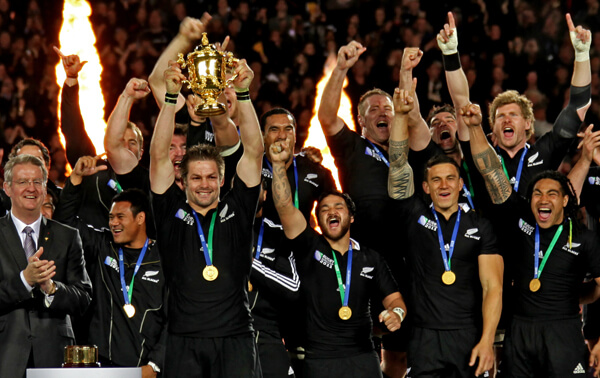
In the lead up to the 2011 Rugby World Cup New Zealand were at the height of their powers, in the middle of one of the most dominant decades of performance of any team in history of professional sports. The lessons of 2007 were learned, the coaching triumvirate that oversaw the QF lost of 2007 had taken the side to new heights and they kept their number one ranking throughout the lead up to the tournament and beyond.
France, were fifth a couple of years out, rising one place to fourth on the eve of the tournament, so making the final is an overachievement but perhaps not overwhelmingly so.
Australia rose from third to second over the two years and finished third, so that would be inline with expectations (disappointing as it was).
Wales, coached by Warren Gatland after their 2007 pool capitulation, were the best overperformers, moving from 8 to years out to 6 at the start of the tournament and making it through to a semi against France which they lost narrowly, 8-9.
Ireland slipped from fourth to eight and got bundled out in the quarters, England improved from sixth to fifth but also dropped out in the quarter too.
So in 2011, rankings were good at picking the winner, but France and Wales particularly, outshone their higher ranked opponents – and that Wales improvement could be a major inspiration for Australia over the next two years.
2015
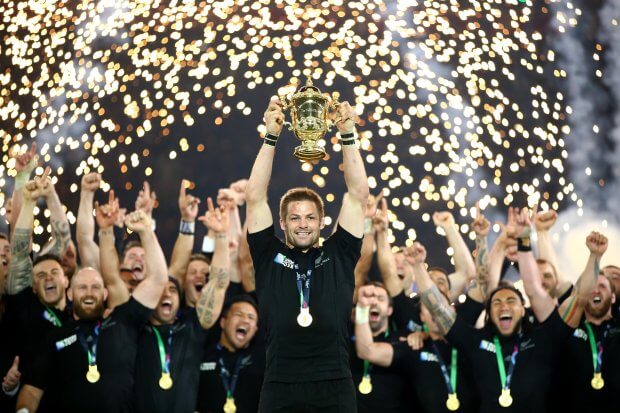
The rankings in 2013 proved perhaps to be the best predictor of RWC success. New Zealand dominated the four year cycle again, losing only two games and drawing one of the 36 games they played in the four year cycle including a clean sweep in 2012 and an unbeaten run in 2013. They went on to win the 2015 World Cup in a canter over Australia, who were ranked third two years out and had climbed to second on the eve of the tournament.
South Africa, too, were on form – starting in second in the rankings, dropping to third in early September 2015 and claiming third in the SF losers’ play off.
As everyone knows, England massively (and embarrassingly) underperformed in their home World Cup, dropping out in the pool stages, after entering the tournament as the fourth ranked team, unchanged from two years earlier. France, Ireland, Wales and Scotland all dropped out in the quarterfinals. Scotland were very unlucky to do so, but they went into the tournament ranked 10th, so, if you didn’t see their game against the second ranked Wallabies, you wouldn’t know how unlucky they were. Argentina, went from a ranking of 10th in December 2013 to 8th in September 2015 and parlayed that into a Semi Final appearance. Argentina, were again the big overperformer, and again, this should be an inspiration to us. While I want a win, a semi appearance at our own RWC is probably a pass mark for the organisers – the final will sell out regardless.
2019
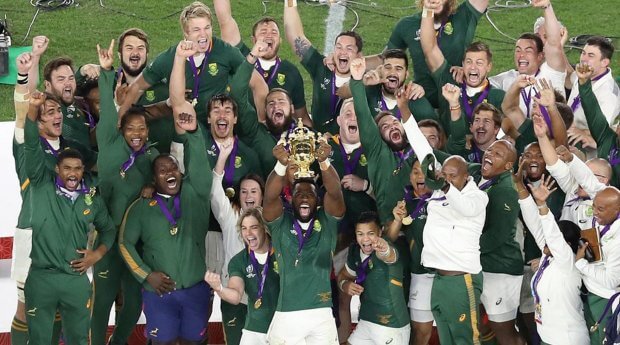
2019 saw South Africa triumph at a RWC for the first time since 2007 in France, and they joined New Zealand as the only team to win the RWC three times (1995, 2007 & 2019). They did this by coming from the lowest ranking of a national team, two years out from the World Cup, ranked sixth in December 2017 and they had only improved to fifth by the beginning of the tournament in Japan. New Zealand were ranked first both two years out and going into the tournament in September 2019, having won the previous two RWC’s. There finish as a loser in the semi-final against England would have been disappointing, all losses are for the All Blacks are, but it’s not that from the ranking that it should be a surprise. England were ranked second two years out, and had edged out to third on the eve of the tournament but that’s roughly in line with their loss in the final. The other semi-finalist, Wales, had come from seventh two years out to fourth just
prior to their first pool game in Japan. That is another positive move for Australian fans to hang on to. And they lost the semi-final against the eventual champions, South Africa, by just one penalty goal, heavy edged out France in the quarterfinal by a point. Great tournament play and the culmination of over a decade of work by head coach Warren Gatland. Ireland and Australia, both underperformed their rankings. Ireland was ranked third in late 2017, improving a place to second by September 2019. So, a semi-final ranking was to be expected, but they were comprehensively beaten by the All Blacks in the Quarters. Australia were fourth two years out but were already on the slide by the time the RWC started, having slipped to sixth by September 2019. Scotland were there or there abouts but their historic loss to host nation Japan, while great for the tournament organisers, put the nail in the coffin for Scotland’s progress (and no ref to blame this time).
So if you’re looking for inspiration, 2019 is the year to look at. Japan made the quarters from outside the Top 10, Wales rose from seventh to a RWC Semi-Final and South Africa won the whole f&%king thing from sixth two years out and fifth in early September 2019.
2023

This article endeavouring to look at how a team’s ranking can change in the two years leading into the RWC rather than how it might be used to determine seedings and pools, but it is worth mentioning that, due to issues around COVID, the seedings for 2023 were determined three years out from the Paris event and based on rankings from 1 January 2020 – just a couple of months after the 2019 RWC. Having said that, the seedings did create issues for some sides, with the top ranked sides by the beginning of the tournament South Africa, New Zealand, Ireland and France, all on the same side of the draw. However, the rankings two years out, provided a pretty good guide to the performance of the teams at the event itself.
South Africa were the leading side in the world two years out and just one rank behind that in September. New Zealand were second in December 2021 and fourth going into the tournament – so a minimum of a Semi Final would have been expected.
England were third in 2021 but had slipped to eighth by 2023, after dumping their coach nine months earlier. Their performance to make a semi-final in 2023 was a surprise but, without any disrespect, they did come up through the easier side of the draw, in a pool with Argentina (6), Japan (10), Samoa (12) and Chile (22). They faced Fiji, winning by just 6 in their quarterfinal but saved their best performance of all for the semi-final against South Africa, where they lost by just one point (South Africa won their quarter, the semi and the final by just one point). Argentina were a side on the improve going into the World Cup, rising from ninth in December 2021 to sixth by the beginning of the tournament and progressing through to a semi-final against New Zealand, where they lost heavily.
Ireland and France both improved across the course of the two years leading into RWC 2023. Ireland rose from fourth to first and France from fifth to third. But the strength of their pools and the unbalanced draw had a significant impact on their final position. And also, their Quarterfinal losses, Ireland going down by just four points to New Zealand and France losing by a point to South Africa, both eventual finalists, point to just how narrow the margins were at the top end of at the time and, had those results been reversed a France vs Ireland final would not have been a surprise.
Is the Trend our Friend?
Well it’s not actually our enemy, as long as we start winning. The 2023 RWC tournament was probably an outlier but there is one trend that looks to be coming through and one that Australia can take a lot of encouragement from, if they can start to string some wins together. Firstly, while the top six looks very strong at the moment, there can be substantial movement in those last two years of the cycle. Argentina moved from 9 to 6 in 2023 and made a semi, likewise Wales moved from 7 to 4 in the lead up to 2019 and made a semi (losing narrowly to the champion South Africa in that game). Argentina move from 8 to 6 leading into 2007 and Wales from 8 to 6 in 2011, both making semis in those tournaments. South Africa moved from 6 to 5, before winning in Japan in 2019.
So there is a trend of teams showing improvement across the last couple of years of a tournament and carrying that momentum into the world cup to at least make the top four. And similarly, there is a trend of sides slipping from a higher position a couple of years out and carrying that losing momentum into RWC where they performed poorly.
And what about the top four a couple of years out? Both NZ and Australia were ranked top four in the lead up to the 2007 world championships, where they dropped out in the quarterfinals. Similarly in 2011, Ireland and South Africa, both top four ranked sides in 2009, dropped out in the quarters. England were ranked fourth in 2013 before not even making the quarters in 2015. Ireland and Australia, top four ranked a couple of years ahead of 2019 were QF losers that year.
C certainly an interesting post and I think despite seeing the Boks there 3 times and NZ twice, there is some hope for everyone else.